
Winter Livestock Preparations – Winter Barn

Follow these steps to keep your animals comfy, your equipment in shape, and to leave the ice, snow, and freezing outside the door!
While most animals are quite resilient to the winter cold, a few preparations to their living quarters will help them to be comfy and healthy throughout the whole cold season in a warm winter barn.
- Blankets – Keep a good supply of blankets and dog sweaters around for when it gets really cold. Note: Most hairy animals, like goats and horses, will adapt to the cold by growing a thicker layer of fur in Autumn. It’s important to keep the blankets off them in the cool Fall so that their winter coats can grow out naturally. Of course, if it’s really cold, feel free to resort to the blankets, but for the most part, one can rely on nature to protect its own during the cold months of the year.
- Fresh bedding – Stock up on bedding and hay. Bedding should be comfy, clean, and ready to be distributed among the stalls. Fresh bedding will give your animals a warm place to lie down. Spread a tarp over it in storage or provide some other kind of protection for your stall bedding and hay stacks while it sits in your winter barn.
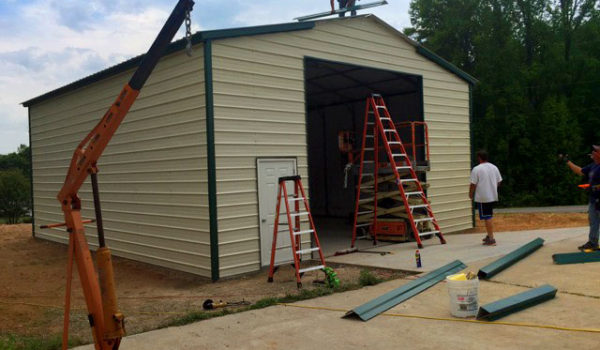
- Insulation – Though metal buildings won’t rot or become infested by critters like wooden structures do, they are made from a much more compact material and thus, do become cold very quickly. This is the one disadvantage of steel; it’s high heat conductivity.The simple and affordable solution to regulate the warmth in your winter barn is to insulate it.
- Fire hazard clean-up – A thorough winter barn clean-up provides essential fire protection. Steel buildings are fire resistant, but bedding, hay bales, and cobwebs are highly flammable. Wipe up the barn walls and ceiling and sweep the floors of dust and cobwebs. Check out our article on storing hay bales for winter livestock for more information about carefully storing hazardous materials.
- Water heaters and/or Bucket insulators – These will keep drinking water from icing over, and will prevent you from running out in the cold every 3 hours to break the ice that’s accumulated in your barns’ troughs and buckets. These are definitely a worthy investment of your money, as they’ll save you tons of hassle.
- Ventilation – Last but not least, one of the most important winter livestock preparations to remember is that your animals need a constant flow of fresh air, even when it’s cold outside! Leave that window open a tiny crack, and let the air freely blow through stalls so it never gets stale.
Elephant Barns builds winter barn designs for customers in 48 states across the USA. We proudly serve our customers in any way that we can, whether it be providing tips for winter livestock health or letting them design and build their own barns online.
Did you find these winter livestock preparations useful?
Tell us how you equipped your winter barn on our Facebook and Twitter pages.
Share: 
Written by Elephant Barns
Elephant Structures provides real-time pricing on metal carports, metal garages, and metal barns through Carport.com and ElephantBarns.com. Elephant's patent-pending BuildID system provides carport buyers with the ability to create, customize, and see exactly what they are buying. It's the easy way to buy a metal building...