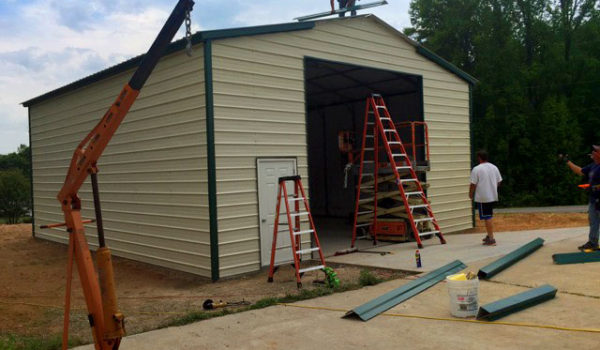




Modern agriculture is a renaissance industry. Just when you think that farming and barns have taken a backseat to technology and innovation, the mighty pitchfork comes storming back.
It appears though as if the proverbial ax has always been poised to deliver the finishing blow to the enduring legacy of farming. Barns have been a favorite scapegoat for those looking to divorce America from its iconic forebearers. These rustic relics have captivated the American spirit and imagination since the Revolutionary War. For some unknown reason, farming and barns have become synonymous with stubbornness and backwoods antics.
Preserve farming heritage with a metal barn
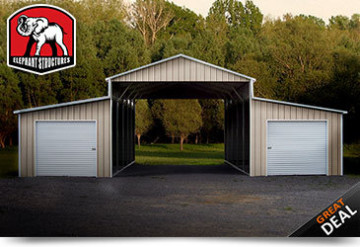
Farming, however, is more about cultivating crops and refusing to let go of tradition. American agriculture is about cultivating a way of life, too. They’ve also proven resilient to change with a fortitude stronger than metal. When wooden barns proved inferior to new building supplies, metal barns stole the show and haven’t looked back since. Our buildings are also cheaper and easier to assemble with lasting staying power.
Metal barns help the evolution of farming continue
Regardless of changes in technology and the demands of a modern market, steel metal barns have risen to the occasion faster than an any Amish village could assemble a vintage wooden model. An Elephant Barns metal building is up to the task of protecting your livestock, feed, and farming equipment and tools. And since our buildings are more resistant to fire, you can have peace of mind knowing that your investment is safe.
New, innovative uses with metal barns will maintain farming’s legacy
While some things may never change, it would be foolish to ignore agriculture’s slowly emerging changes. Tobacco cultivation is one of these dying relics. For decades, hanging tobacco in a wooden or metal barn have become a fall tradition. But as smoking rates continue to drop dramatically, tobacco will continue to wither on the vine as new crops emerge to take its place.
Metal barns and creative uses
Metal barns aren’t just for storing cattle and hay. Farms across the nation have realized a metal barn’s full potential. A Stratford, Connecticut couple recently repurposed their barn as a makeshift winery that has since become a full-time operation. They aren’t the only ones to have found a secondary or innovative use for metal barns. Aside from traditional farming uses, some owners have transformed their metal barns into basketball gyms, dance halls, breweries and more! With a metal barn, you have a blank canvas!
Go green and reduce your carbon footprint with an Elephant Barn!
Reducing carbon pollution and mitigating the effects of pollution isn’t just a growing trend. Sustainable living and agricultural has quickly emerged as a new way of living and we don’t see this mindset changing anytime soon. Like other industries, the tiny home craze has infiltrated the metal barn business. Capitalizing on their low costs and quick installation, environmental friendly buyers are purchasing metal barns to convert to tiny homes. Considering the minimal overhaul involved in transforming a metal barn into a house, we can’t blame them!
Share: